
Your cart is currently empty!
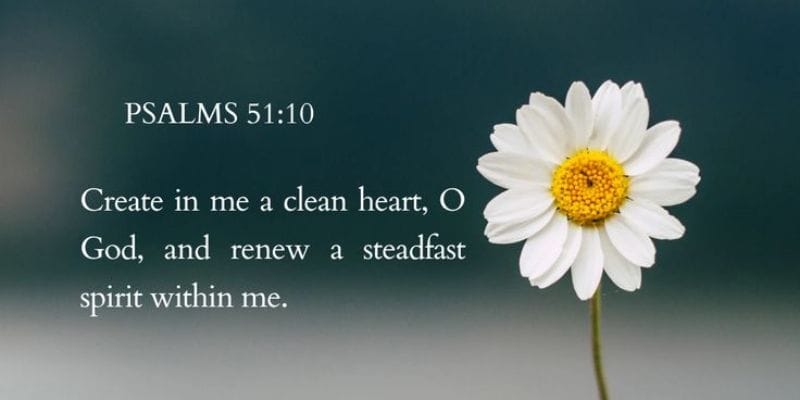
“Create in me a clean heart, O God, and renew a right spirit within me.” – Psalm 51:10 (KJV)
This verse, tucked in the heart of one of the Bible’s most vulnerable and repentant psalms, captures the longing of a soul desperate for restoration. Psalm 51:10 is more than a prayer—it’s a cry for transformation. It’s a reminder that spiritual renewal begins not with behavior, but with the heart.
The Context of Psalm 51
Psalm 51 was written by King David after he was confronted by the prophet Nathan about his sin with Bathsheba (2 Samuel 12). David, once known as a man after God’s own heart, had fallen into a web of lust, deceit, and even murder. But rather than defending himself, David repented deeply.
Psalm 51 is his confession, and verse 10 is its center. David knew that the problem wasn’t just what he had done—it was what was in his heart that led him there. He didn’t ask God to fix his circumstances; he asked for a new heart.
“Create in Me a Clean Heart”
The word “create” (Hebrew: bara) is the same word used in Genesis 1:1—“In the beginning, God created…” It refers to a divine act that only God can perform. David wasn’t asking for a spiritual tune-up; he was asking for a spiritual rebirth.
A clean heart is one that is free from sin, deceit, pride, and guilt. It’s a heart that beats in rhythm with God’s. David understood that only God could cleanse and restore his inner being.
This part of the verse reminds us that no matter how far we’ve fallen, God has the power to make us new. We don’t need a second chance; we need a new heart—and only God can create that in us.
“Renew a Right Spirit Within Me”
The second half of the verse is a prayer for stability and strength. “Right spirit” can also be translated as a “steadfast” or “loyal” spirit. David wanted more than forgiveness—he wanted the strength to stay faithful.
Sin had destabilized his soul. He needed renewal—not just remorse. He didn’t want to return to the same old patterns. He wanted to be anchored in righteousness.
This part of the verse speaks to all of us who have ever failed and feared falling again. It’s not enough to be sorry. We want to be strong. And God, in His mercy, provides both grace and power.
What This Verse Teaches Us About Repentance
- True repentance is heart-centered. David didn’t just say “sorry.” He asked God to go to the root of the issue—his heart.
- God is the only source of true renewal. Only God can create, cleanse, and restore us. We can’t fix ourselves. We can only surrender.
- Change is possible. No matter how deep the failure, there is hope. God can create purity where there was sin, and faithfulness where there was compromise.
Applying Psalm 51:10 Today
- Personal Confession: Make this verse part of your daily prayer. Bring your heart before God honestly, asking Him to cleanse and renew you.
- Daily Renewal: Don’t wait until you’ve fallen. Ask God each morning to renew a right spirit in you—one that is steady, humble, and obedient.
- Encouraging Others: Share this verse with someone who feels ashamed or stuck. It reminds them that God’s mercy goes deeper than their mistakes.
A Word of Hope
Psalm 51:10 is not just for the guilty—it’s for the hungry. Anyone who longs to walk in purity and power can pray this verse. It’s a daily invitation to let God do a work of grace in our innermost being.
David’s story didn’t end in failure. Because he repented, God restored him. And the same is true for us.
“If we confess our sins, he is faithful and just to forgive us our sins and to cleanse us from all unrighteousness.” – 1 John 1:9
Final Thoughts
Psalm 51:10 is a verse we can carry into every season of life. Whether we’re in need of forgiveness or simply longing for deeper intimacy with God, this prayer opens the door.
Ask boldly. Trust fully. And watch how God creates something new in you.
“Create in me a clean heart, O God, and renew a right spirit within me.” – Let this be our daily cry, and our pathway to peace.
Leave a Reply
You must be logged in to post a comment.